




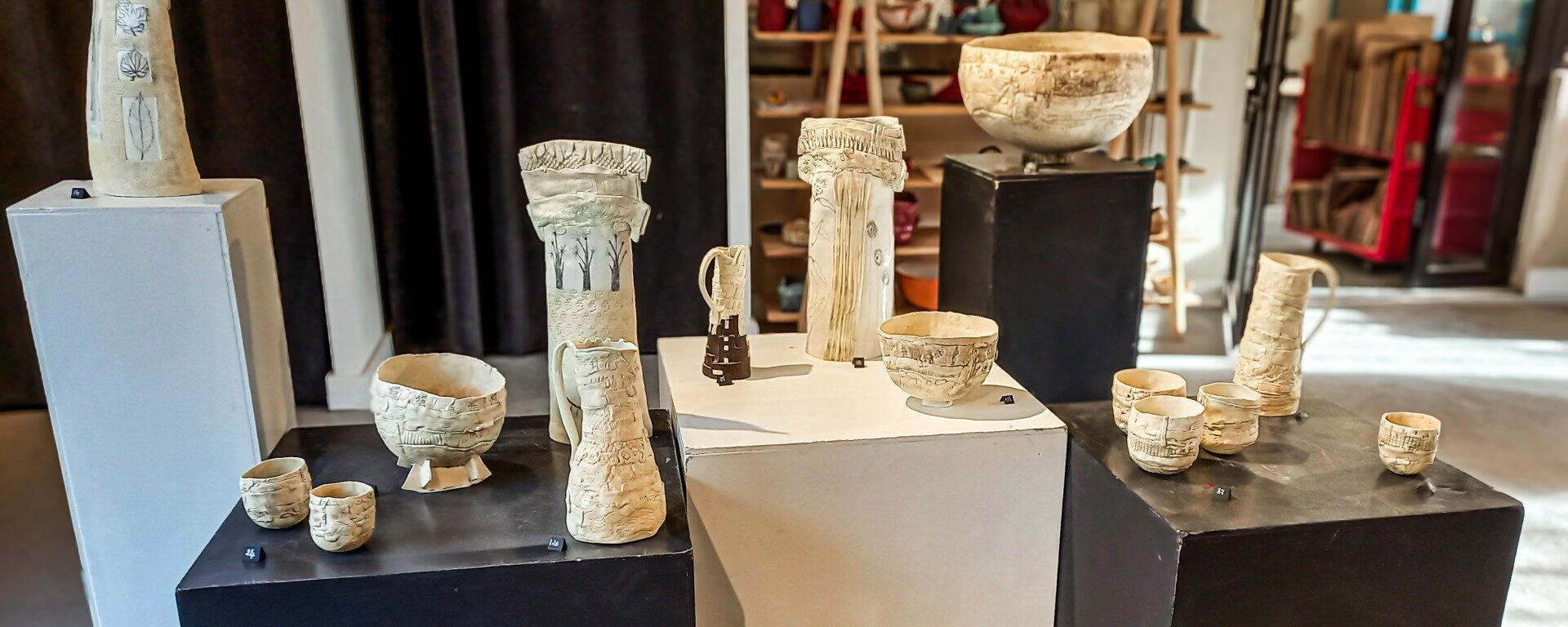
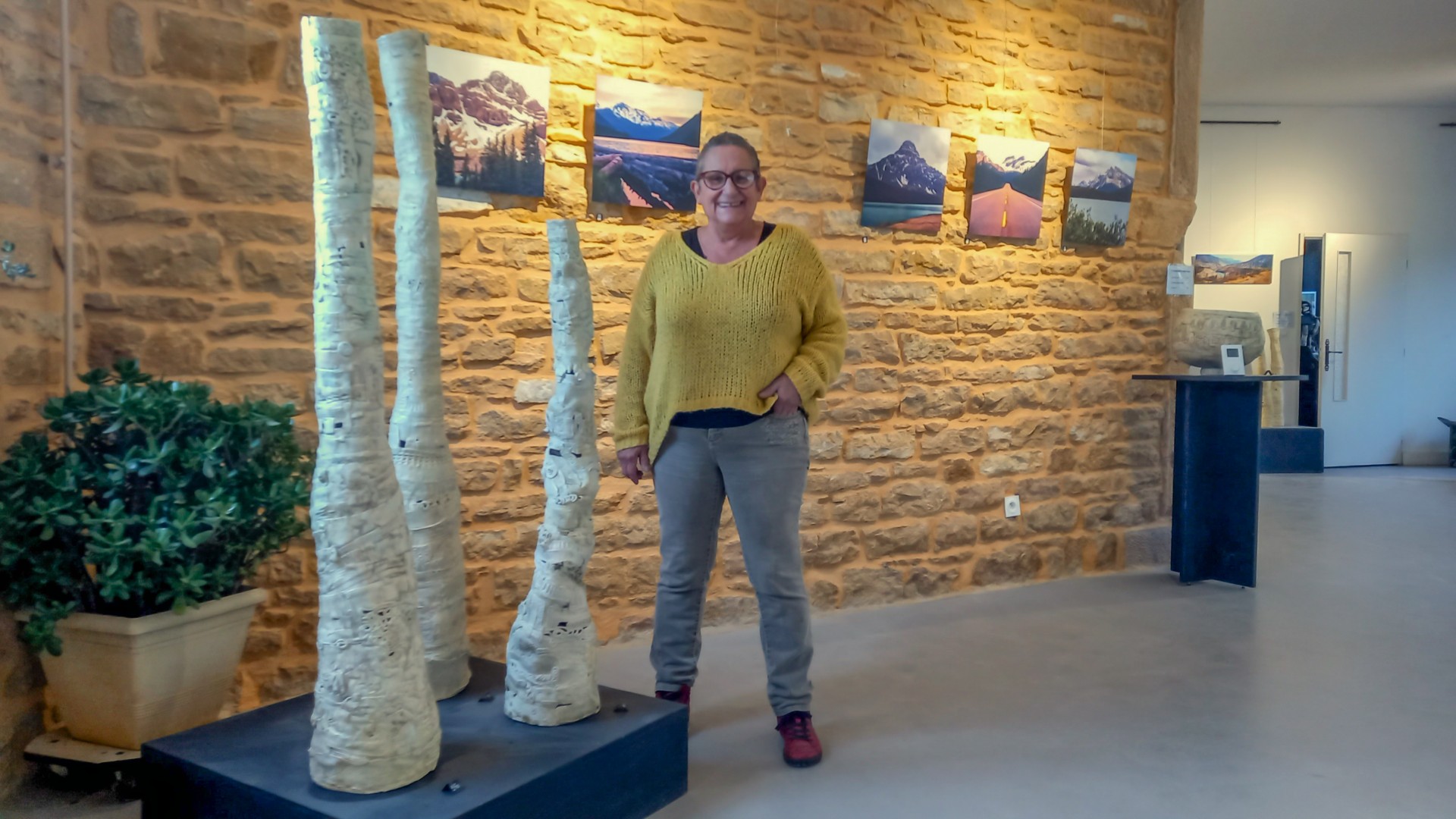
We visited Martine Meyrieux, a ceramic artist, at her studio/gallery in Jarnioux. It was a wonderful encounter with a passionate artist who loves sharing her expertise through her ceramics workshops , helping adults and children express their creativity.
 Rhône Tourism Hervé Rocle
What led you to ceramics?
“My first experience in teaching began in Villefranche, about forty years ago, at the Béligny community center where I worked in the basements of buildings with children. I had been working with clay for 3-4 years and learned a lot by teaching others. Over time, I took courses with ceramicist friends, notably with Daniel Culis , who was my potter mentor. He helped me along my self-taught journey, which allowed me to prioritize my life with my 3 children .”
Martine Meyrieux's life journey led her to collaborate with "La plume au miroir," a local association in Villefranche-sur-Saône that worked with people with disabilities, offering introductory workshops in drawing, puppetry, and pottery. Her passion for teaching and sharing knowledge, combined with her sensitivity towards people with disabilities, has never left her and naturally led her to work with AGIVR, where she provides services at the Brianne residence.
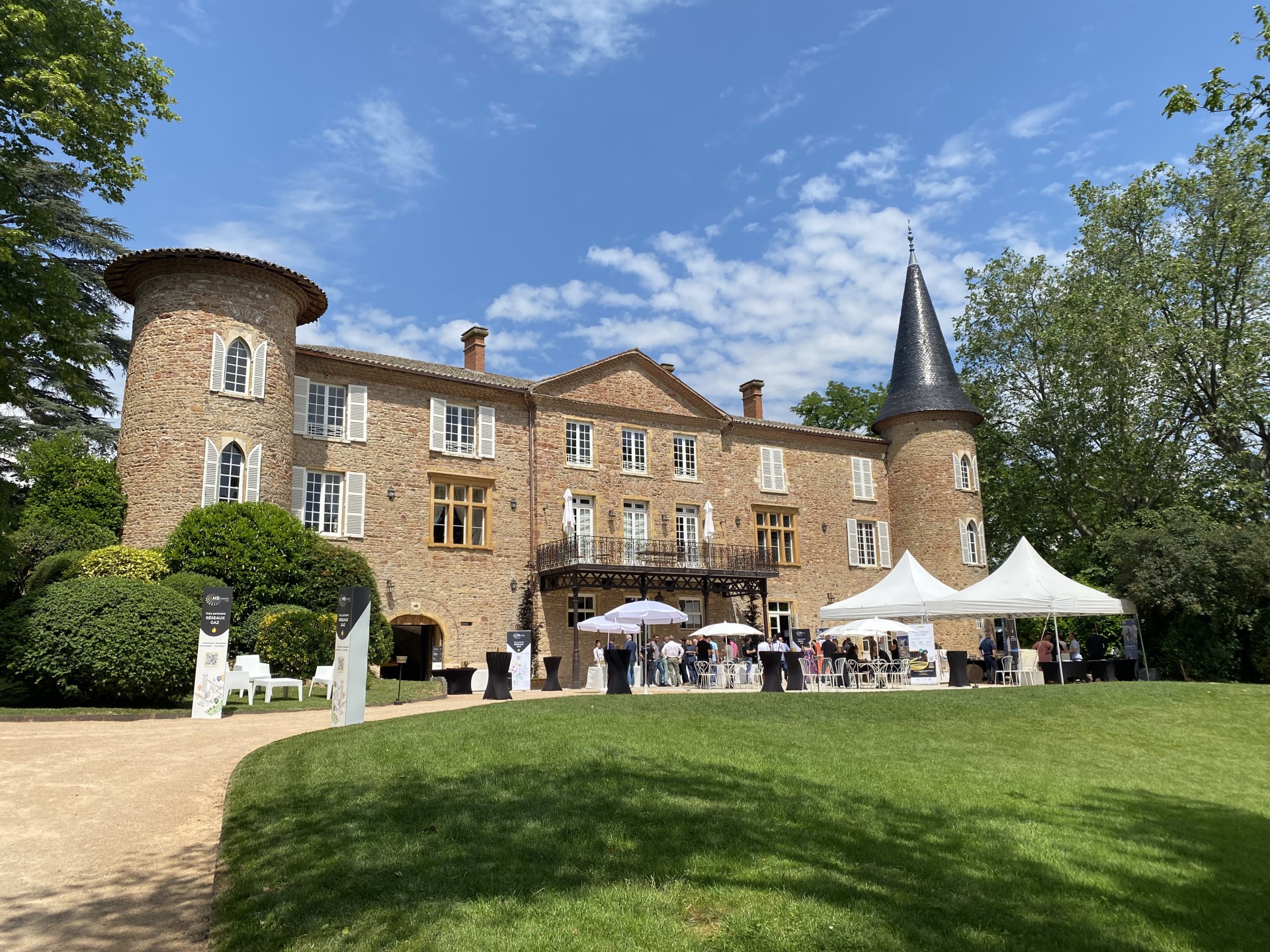
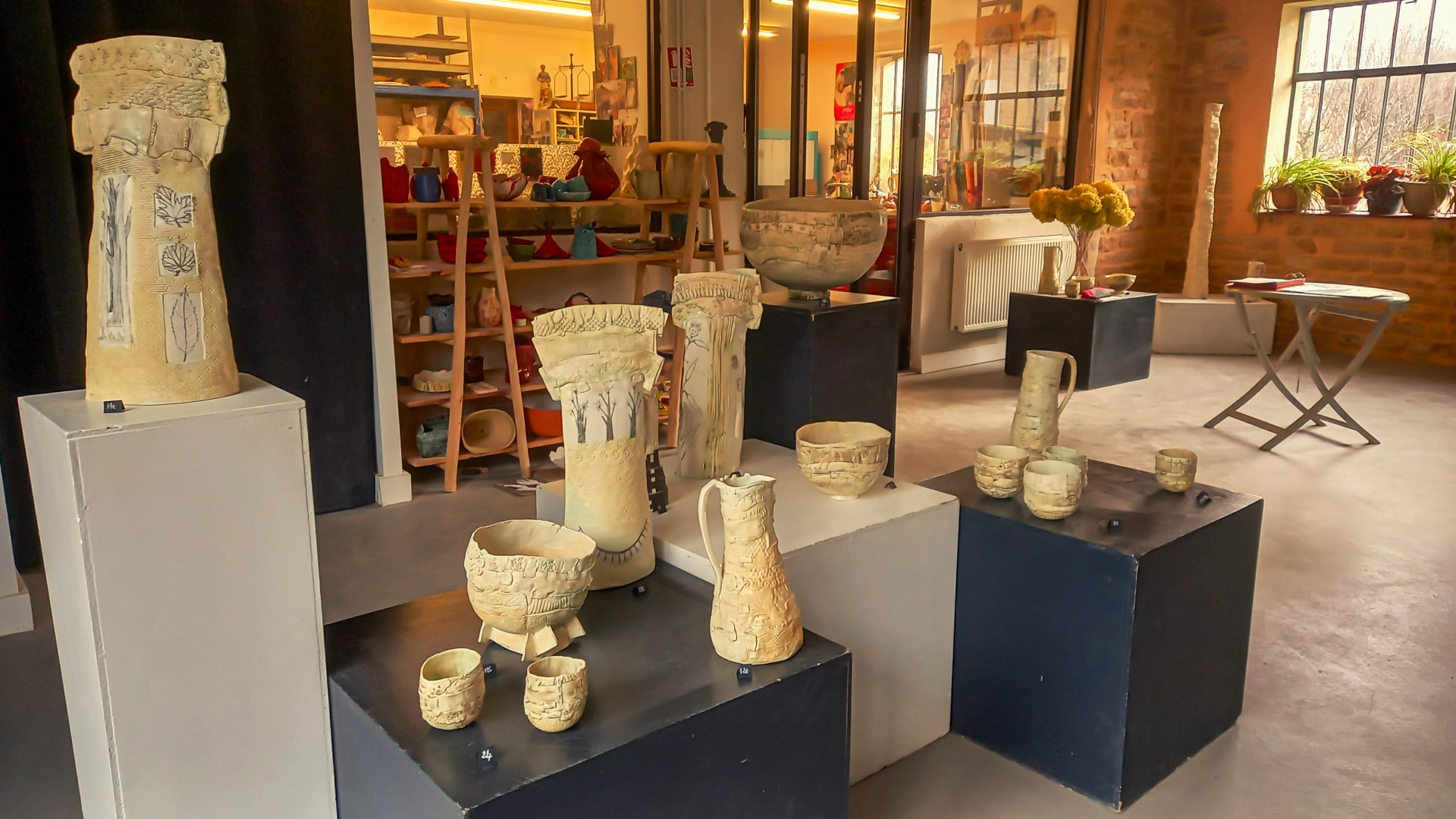
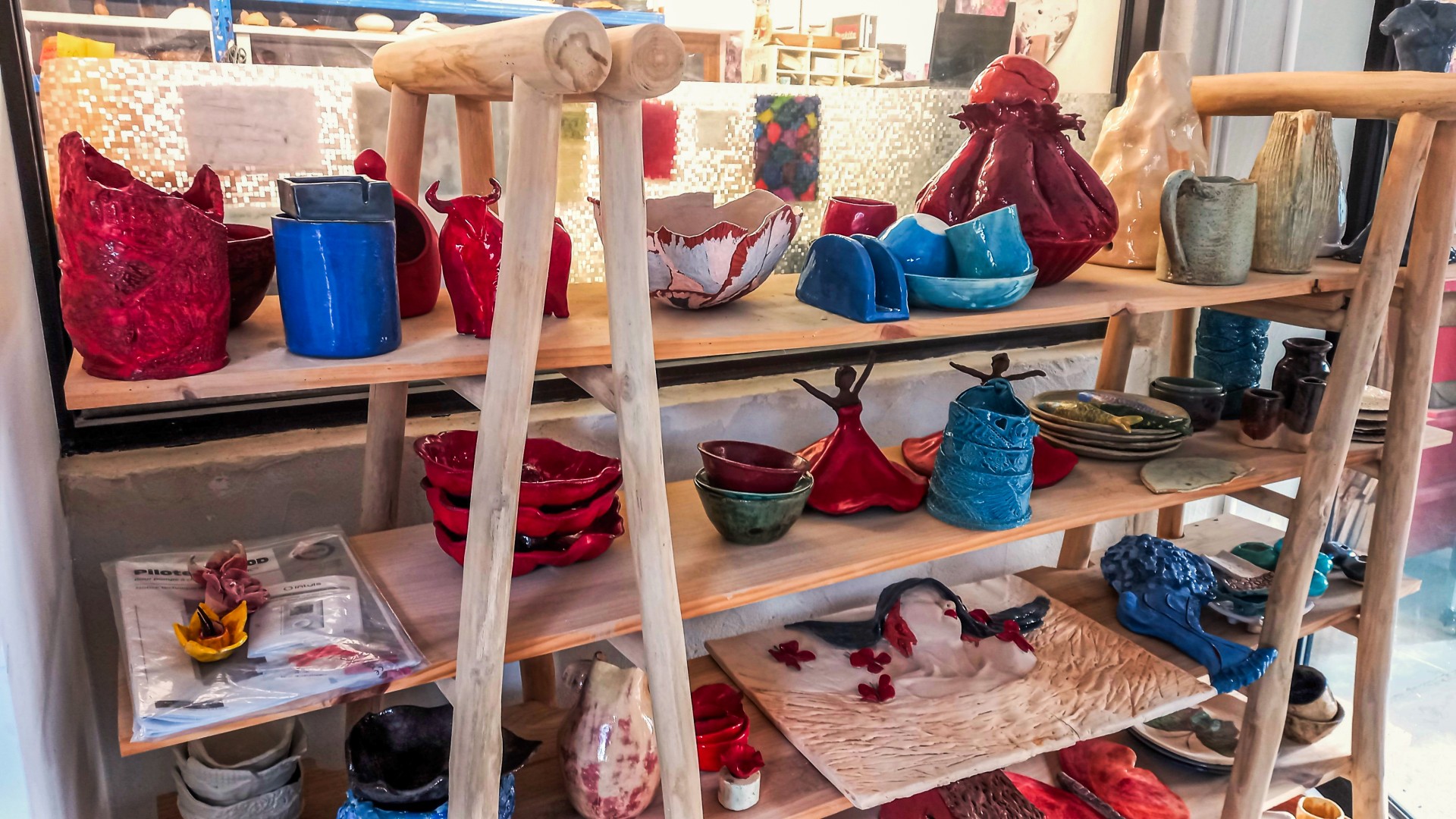
Martine Meyrieux has been running her studio in Jarnioux for almost 10 years. There, she offers classes and workshops for adults and children, and exhibits her own work and that of her students throughout the year, supplemented by two or three temporary exhibitions dedicated to artists she has met along the way. "Right now, I'm exhibiting a photographer I invited. It's also a very active space in the village, as it can accommodate around 80 people for performances, meetings, and exchanges with local associations, allowing them to share their skills."
Can you tell us about the ceramics courses and workshops?
 Hervé Rocle
“I offer workshops for children, either as intensive courses or weekly sessions, but the parent/child option, with a joint project during the holidays, seems to be popular because it allows for shared experiences and time spent together. I also offer weekends or 5-day workshops for adults, not in the form of classes but rather guided experiences that allow each person to imagine a project and work through it gradually.”
Initially, the trainees create a model, crafting an object of their choice: ceramic pieces, pottery, utilitarian utensils, dishes, plates, etc. They then decorate these pieces, let them dry, and fire them for the first time at 1020°C. They can then leave them unglazed or choose to glaze them with a second firing at 980°C for earthenware, or at 1240°C for stoneware or porcelain. The firing process takes approximately 8 hours.
Generally, adults and children alike enroll for the entire year, or at least for a term, as it's essential for everyone to have time to learn the techniques, master the fundamentals, and appreciate the development of their artistic abilities. There are also those who only attend workshops because it's difficult for them to commit to weekly sessions.
“I also receive school groups, like the school from Jarnioux, which came from nearby. The children were delighted to see the workshop in action and to follow the steps involved in making an object. I also hosted a class of fifth-grade students from the Châtillon d'Azergues middle school who had prepared sketches with their art teacher to create a bas-relief with figures and a scene, on a theme inspired by Modigliani, Matisse, and Niki de Saint Phalle. They came to my workshop, and I guided them in creating their work in clay.”
Martine Meyrieux uses a gas kiln to make Raku, short for Raku-yaki, which means pleasure or joy in Japanese. It's not a firing technique but a technique linked to the wakijcha tea ceremony and its bowls. Originally, it referred to very simple, unadorned, handmade bowls fired in wood-fired kilns and then plunged into water while still glowing red-hot. Today, Raku designates a rapid, low-temperature firing technique, around 1000°C. In Europe, ceramicists primarily use gas kilns.
The workshop also has a wood-fired kiln for working with polished clay. Having several kilns allows me to test different techniques that I haven't fully mastered, to discover them and share them with other ceramicists, and to integrate them into my courses and workshops.
An artist involved in local cultural life
Martine Meyrieux is also a member of the group of artists and craftspeople, Les Ateliers Révélés , which organizes a discovery trail in several villages of the golden stones during a biennial, to allow visitors to discover their different original creative universes while strolling from village to village to discover the local heritage of the territory of the Golden Stones.
Martine Meyrieux also organizes the Jarnioux pottery market in her workshop and in the village, also biennial, (the next one will take place on May 23 and 24, 2026, with the students who have taken her courses). She is also a partner of the musical walks offered by Cordes en Calade , an orchestra attached to the music conservatory of Villefranche sur Saône, whose musicians are mostly students of the third cycle of the Conservatory or musicians who wish to continue music.
As you might have guessed, Martine Meyrieux's workshop is a place that comes alive in many different ways, starting with clay and exploring related subjects. "The richness lies in diversity, and we always learn from others."
How is porcelain made?
 Hervé Rocle
Porcelain is not made from natural clay. It is primarily composed of a mixture of quartz, feldspar, and kaolin, with the addition of pipe clay, which increases its plasticity. The quartz and feldspar are ground into a powder. The feldspar lowers the porcelain's firing point. These three ingredients are mixed with water to obtain a paste of varying consistency for molding.
The molded pieces are left to dry and then undergo a first firing below 1000°C. The resulting object, bisque porcelain, is fragile and porous. Porcelain fired without glaze at a high temperature, between 1200°C and 1400°C, is called porcelain biscuit.
The bisque-fired piece is coated with a glaze or varnish, and a second firing between 1260°C and 1300°C transforms the glaze into a vitrified film. Decorative elements can then be applied by hand or screen-printed and permanently fixed to the piece by a final firing.
The history of ceramics and porcelain
Although firing techniques up to approximately 1200°C and vitrified white pottery using pastes mainly composed of kaolin have existed in China since at least the 3rd century , at that time the vast majority of ceramics were in fact simple pottery or, at best, stoneware; it would evolve towards excellence until the 12th century.
It was only in 1712 that the first samples of kaolin arrived in France, and it wasn't until the discovery of the Saint-Yrieix-la-Perche deposits south of Limoges in 1768 that hard-paste porcelain could be produced and standardized by the Sèvres Manufactory. Today, porcelain is primarily used in tableware. Its discovery was a technical triumph in the field of ceramics, leading to an influx of "eggshell" porcelain into Europe in the 17th century , its thin walls highlighting its translucent quality. Since then, the world-renowned porcelains of Sèvres and Limoges, along with German, Chinese, and Polish porcelains, have been among the finest and most prestigious hard-paste porcelains.
Chinese ceramic experts have developed a set of criteria involving firing temperature (1260 to 1300 °C), proportion of kaolin (30% to 60%), iron oxide content (less than 1,7%), porosity (0,6%), absorption (0,3%), translucent appearance (up to 5 to 8 mm), and shock resonance.
One of the few remaining natural clay deposits close to us is the Puisaye deposit , a clay with very particular qualities that allowed the development of pottery making and the renown of Puisaye stoneware, traditionally thrown on the wheel. Except for Puisaye blues, which are molded. The throwing technique, stemming from medieval traditions, consists of placing a lump of clay on a rotating platform, then throwing the pottery on the wheel, followed by shaping the handles before drying it on boards.
Although stoneware, being naturally waterproof, does not require glazing, some utilitarian pieces, bowls, tureens… are covered with glazing, for aesthetic reasons, but also for practical reasons, because the smooth surface of the glazing makes cleaning easier.